|
Chester Surline, Supt
Hollis Miner, Principal
Erik H. Kaas, Class President
Margaret Schrot,Class Sponsor
Alan Murray,Class Sponsor
* * * * * *
Class of 1951
Joan Allen Richardson
Gwen Baird Thomas
Don Benjamin
John Bennett, Jr.
Jackie Boman Smeiser
Barbara Brandel Carroll
George Bray
Ruth Burkett VanLiere
Don Byron
Dick Chapman
Stanley Cottle
Leo Drabek
Wanda Dunbar Reilly
Edmund Durfee
Mary Lou Ellis Dunne
Shirley Fox
Ruth Goldy Klug
David Gussman
Clara Hagerman Robertson
Phyllis Hall Morris
Viola Hall Hawley
Marjorie Hasty Fletcher
Ann Hewson Bray
Henry Huck
Erik Kaas
Harry Kenyon Jr.
Beverly Loomis Palm
Duane Loomis
Marlene Lucas Bamfield
Mary Lucas Nestle
Betty Marshall Graham
Betty Mattice
Bill McCracken
Frances Moore Piar
Dale Munn
Emma Jean Ouderkirk Valley
Joe Petrovish
Paul Richardson
Harley Sappington
Joyce Sergent Kohler
Peggy Steinhauser Rau
Don Thompson
Shirley Vincent Awrey
William Webster
Bill Winslow
June Wolfe Maxey
Marvin Zimmerman
Arthur Zink
William Palm
Wayne King
*********************************
******************
Mark John Tetu, 87, passed away Saturday, March 2, 2019, at the Villa at West
Branch. Mark was born June 10, 1931, in Grayling to Frank
and Florence (Smith) Tetu. He lived in West Branch most of his life. Mark served in the Navy during the Korean War. On Jan.
15, 1966, Mark married Linda Lee Doane. Mark was a member of St. Joseph Catholic Church, the Knights of Columbus, the Moose
Lodge and the Eagles Club. Mark was also a member of the West Branch Volunteer Fire Department for more than 25 years. He
owned and operated Culligan Water Conditioning in West Branch for 48 years. During his retirement, he worked as a driver for
Dean Arbour Ford. Mark proudly received his private pilot’s license at the age of 50, and he enjoyed flying with family
and friends. Mark liked golfing, camping, snow skiing, water skiing, traveling and taking trips to Florida. He loved being
part of the “table of knowledge” at Mac’s Place, where he is often referred to as “Mark: the man,
the myth, the legend.” Mark is survived by
his wife of 53 years, Linda; his daughter, Lori Tetu; son, Mark Jr. (Whitney); and grandchildren, Imari Tetu and Tony Curtis,
all of West Branch; sister-in-law, Marlene Tetu of Midland; and many nieces, nephews and a special niece, Michele Ahrent,
with whom he had a very special relationship. He was preceded in
death by his parents, Frank and Florence; brothers, Robert (Juanita) and Frank; sisters, Mary Monica “Monnie”
(Jim) Orr and Ann Tetu; and his best friend, John Artman. *
* * * * *
William Edward Winslow, 85, passed away
peacefully at home in West Branch Wednesday, Oct. 10, 2018, after battling cancer.
He was born Jan. 21, 1933, to Don and Grace (Struble) Winslow. He was a best friend and beloved husband to Darlene for
60 years; devoted and proud father of Laureen (Fred) Hages; proud grandfather of Josh (Alea Jascor) Hages and Courtney Hages;
sister of Jeanine Clemens; and had many dear family members and friends.
Bill joined the Army shortly after high school and was stationed in Germany for two years. He was a member of the American
Legion for more than 50 years. He was a past master of the Masonic Lodge 376. He was an active member in his younger years
and an honorary life member of the lodge. Bill and his wife were guardians of the local Job’s Daughters of the Masons.
Bill worked as produce manager at the A&P Grocery store for 33 years. Bill and his wife were leaders of the Junior
4-H service club. He was one of the main people to initiate developing a county fair in 1980 and was the 4-H horse club leader.
Bill spent an untold number of hours volunteering at the fairgrounds, often referring to it as his second home. In 2012, Bill
and Darlene were crowned king and queen of the fair.
He loved to hunt, fish, travel and go camping. Bill was an excellent gardener and took pride in his flower beds. He had
the greenest thumb of all and greatly enjoyed growing flowers and vegetables. Bill cared most deeply for his role as a father
and grandfather; he always spoke highly of his daughter and grandchildren and was very proud of their accomplishments.
He will be remembered for his kind and gentle heart and he was always gracious and generous. He was the kind of guy who
would lend a helping hand to anyone in need. We are left with a void that will never be filled and he will be dearly missed
by everyone who knew him.
Bill's family would like to thank everyone for all their prayers, love and support they've received over the last couple
of months. Your kindness never went unnoticed and was appreciated. Family would also like to extend a heartfelt thank you
to those at Hospice of Helping Hands who provided compassionate care.
We know he is at peace and has gone to be with the Lord, and reunited with family that has gone before him. He leaves
us behind with precious memories. There are some who bring a light so bright to the world that even after they have gone,
the light remains — Bill's light will remain.
Visitation at Steuernol & McLaren Funeral Home in West Branch will begin Sunday, Oct. 14, 2018, from 2-9 p.m. with
a Masonic service at 7 p.m. The funeral service will be at the funeral home Monday, Oct. 15, at 11 a.m. with visitation starting
at 10 a.m. Burial will follow at Brookside Cemetery with military honors. Pastor Kevin Switzer will officiate.
In lieu of flowers, the family requests donations be made to the Ogemaw County Fairgrounds or Hospice of Helping Hands
in honor of Bill. Online condolences can be shared at www.steuernolmclaren.com.
*********************************************************
Phyllis Arlene Morris, age 85, passed away on Tuesday, September 25, 2018 at her home in West Branch, MI with her family by
her side. She has lived in West Branch for over 70 years, formerly of Flint. Phyllis was born on February 5, 1933 in Grand
Rapids, MI to Malcolm and Margaret (Knapp) Hall. On October 6, 1951 she married Burt Morris. Phyllis was a member of the First
United Methodist Church and the Women’s Group. She was also a member of the Sunshine Club, Christmas House, TOPS,
and the Birthday Group. Phyllis enjoyed scrapbooking, cooking, farming, canning and helping others. She loved spending time
with her family, especially her grandchildren and great grandchildren.
Phyllis is survived by her loving husband of 66 years, Burt Morris of West Branch; children, Linda (Tom) Vincent, James
(Elizabeth) Morris, Thomas (Lynn) Morris, David (Patti) Morris, and Steve (Beth) Morris all of West Branch; grandchildren,
Bonnie (Lynn) Morris, Brad (Shannon) Morris, Melissa (Mack Jr.) Hensley, Alyshia (Justin) Griffith, Jennifer Lynn (Joe) Case,
Shannon (Richard) McArthur, Derek (Desirea) Morris, Cassandra Morris, Jennifer Ray (Nick) Gorske, Samantha (Armando Sandoval)
Morris, Stephanie Morris, Devin (Justine Grezeszak) Morris, Chelsea (Jake Stephens) Morris; great grandchildren, Parker, Bentley,
Madisyn, Izabellah, Ryleigh, Lane, Cole, Ayden, Jaxson, Graham, Greyson, Haley, Sophie, Ethan, and Aaron; brother, Malcolm
(Gwen) Hall of Haines City, FL; sister, Marlene (Ronald) Maxam of Mayville, MI; and many nieces and nephews. She is preceded
in death by her parents, sister, Maxine Astbury; brother, Raymond Hall; and grandson, Corey Thomas Vincent.
*********************************************************
Leo Francis Drabek, 85, passed away Monday, June 5, 2017, at The Brook of West Branch.
Leo was born Nov. 12, 1931, in Huron County to Peter and Marion (Chiotti) Drabek. With the U.S. Air Force calling him
to serve, he married his sweetheart Aileen and left the area and traveled the world with his family until his retirement from
the Air Force as a senior master sergeant. Since his retirement in 1971, he lived in St. Helen. He continued to serve our
country through his memberships and active participation in Veterans of Foreign Wars Post 3775, American Legion Post 103 and
the National Rifle Association. Leo practiced his faith as a member of the Ogemaw Hills Free Methodist Church in West Branch.
Leo is survived by his children, Jeffry (Geneva) Drabek of Little Rock, Ark., Norman (Deborah) Drabek of O’Fallon,
Ill., Larry (Jeanne) Drabek of Gladwin and Laurie Drabek of Belleville, Ill.; nine grandchildren; 13 great-grandchildren;
and brothers, Thomas Drabek (Suzanne) of Bay Port and David (Sally) Drabek of West Branch.
He was preceded in death by his wife, Aileen; and brothers, Bruce, Robert, Gary and Jimmy.
Marjorie Ann Hasty Fletcher, 84, of Bay City passed away May 15, 2017, at Beaumont Hospital in Royal Oak.
She was born in Whittemore on April 12, 1933, to the late Dr. Earl Andrew and Mildred (Albertson) Hasty. Marjorie was
a graduate of Michigan State University and was a Spartan fan. She loved cooking and gardening and was a past president of
the Bay City Garden Club. She had served as a co-chairman of the Charity Ball and been a kindergarten teacher in Midland.
She had also worked at Hudson’s and Meadow Creek Clothiers. On June 22, 1957, she married Richard B. Fletcher, and
he survives her.
She also leaves three children, Ann Marie Christian, Richard B. (Debbie) Fletcher Jr. and Sarah E. (Harold) Middleton;
10 grandchildren, Stephanie Marie (James) Brewster, Kyle (Kelli) Christian, Richard Christian, Matthew Ropp, Jaclyn Harper,
Baylee Middleton, Brandi Middleton, Lisa Mieske, Jason Mieske and Brad Mieske; her great-grandchildren, Leah, Willie, James,
Lilah and Fletcher; as well as a sister, Helen Jennings; and a sister-in-law, Janet Hasty.
She was preceded in death by a brother, James E. Hasty; and a brother-in-law, William P. Jennings.
Jacquelyn Glee “Bohlinger”
Bashaw 7-24-33 to 2-27-17 Jackie
passed on to eternal life with her family by her side. She was preceded in death by her husband, Richard Joseph Bashaw II,
her son Richard Joseph “Joe” Bashaw III, her parents, Russell and Agnes “Glee” Bohlinger, her brother
Michael Bohlinger, her sister Mary Sue (Wayne) Jackson and many family and friends. She is survived by her daughter Amy (Kevin)
Lynch of AuGres, her son, David “Jay” (Debra) Bashaw of Howell. Her grandchildren; Jason Chen, Joshua (Chelsie)
Bashaw, Brent Lynch, Jenelle (Sreesh) Lynch - Valiyaveettil, Lauren (Charlie) Lynch-Heath, David Bashaw, Cody Bashaw, Janel
(Chris) Muszynski, William (Britney) Jones, Christopher Downes and Michael Vermeesch. Her great grandchildren; Isabel, Hudson,
Michael, Marlowe, Keaton, Brooklyn, Maevyn, Matteo, Aubrey, Damen, Clayton and Klara, as well as her sister Sharon (Robert-deceased)
Newbecker, Charles (Joan) Bohlinger and Jane (George) Miller. Cremation
has taken place, with the funeral to follow on April 1st, 2017 at St. Mark’s Catholic Church in AuGres, MI at 11:00 A.M.
The family will be available at the church for visitation between 10:00 and 11:00. Burial will follow at Linwood Cemetery in AuGres,
followed by a luncheon at St. Mark’s Church. Jackie made her final wishes very clear. She asks that everyone wear bright
colors and celebrate her life. No flowers please….she has requested balloons *********
Donald R. Thompson Sr., 83, passed away
Tuesday, Sept. 20, 2016, at his home in Jacksonville, Fla. Don was born April 15, 1933, in Flint, the second son and last child of John and Ethel (Miller) Thompson.
Don’s younger years were spent between Flint and Sault Ste. Marie. When he entered high school the family settled in
West Branch. He was active in football, basketball and baseball, and was chosen co-captain with best friend Erik Kaas for
his senior football team. Don graduated with the class of 1951. After many short-term jobs, Don entered the U.S. Navy in February 1952. The Navy took him to many states
and schooling. His final stint for the Navy was an assignment to Norfolk, Va., where he served as an electronic technician.
There his primary duty was flying with combat air crews practicing anti-submarine drills over the Atlantic Ocean. He completed
his Navy enlistment March 15, 1956. Completing
his Navy tour, Don had many jobs that took him around the world, including a three-year post in the Philippine Islands. In
1965 Don was back in the states working at a surveillance project for government. At that time he earned a Bachelor of Business
degree from Southern State College in Arkansas, graduating cum laude. When that job was completed Don moved his family to
Saginaw. During this time he was a jobber selling specialty chemicals and lighting. In 1978 Don bought 40 acres in Clare, where he met his wife Katherine Archbold
House. Together they established Thompson Sales, Inc. After a successful 30 years in business, Don retired at age 78. Don
retired to Jacksonville, Fla., and became a “sunbird,” returning to Michigan to get out of Florida’s hot
sun. Don is survived by his wife,
Katherine; children, Donald (Tuyet) Thompson Jr., Regina (Kirk) Hale, Richard (Tamara) House, Robyn (Mike) House-Guettler,
Michael and William House; grandchildren, Donald (Heather) Thompson III, Erik (Jenessa) Thompson, Christopher (Martha) Thompson,
Corey (Heather) Hale, Katie Hale, Trisha House, Leah (Andrew) Hernthiasong and Relin House; great-grandchildren, Saree, Grace,
Leander and Violet; his godchildren, John Boyd, Amanda Boyd, Ava and Allen; his “favorite” niece, Susan Thompson
Hull and her family; and special friends, Sharilyn Boyd along with Art and Edna Robinson. Don was predeceased by his parents; son, John Thompson; and brother,
Dr. John Thompson. A memorial service
will be held Dec. 3, 2016, at 11 a.m. at the Clare Chapel of Stephenson-Wyman Funeral Home. In lieu of flowers or gifts, the
family would be grateful for donations made to Haven Hospice, 8301 Cypress Plaza Drive, Jacksonville, FL 32256. An online
guestbook is available at www.stephenson-wyman.com.
Obituary for Wanda Lee Reilly
Wanda Lee Reilly, age 83, passed away on Tuesday, May 24, 2016 at The Villa at West Branch. She lived in West Branch,
MI for all of her life. Wanda was born on April 26, 1933 in West Branch, MI to Alfred and Mary (Thomas) Dunbar. She owned
and operated Wanda’s Beauty Salon for 30 years. Wanda enjoyed spending time with her family.
Wanda is survived
by her children, SueAnn (Bill) Healey of Lupton, MI, Mary Ann (Larry) Kartes of Alger, MI and William (Kelli) Reilly of Standish,
MI;… grandchildren, Aaron,
Nathan, Brenda, Scott, Kent, Jock, Brandi, Robert, and Melissa; great grandchildren, Sharydin, Shaylee, Trevor, Kevin, Cayla,
Joshua, Jordan, Samantha, Luke, Alexis, Ashley, Ayden, Abigayle, Heavan and Madelynn; sister in laws, Bonnie (Dalton) Wiltse
of Lupton, MI, Patricia (Keith) LaFountain of Lupton, MI and Anna Mae Illig of Standish, MI; brother in laws, Hank (Elsie)
Reilly of Burton, MI and Kenneth McPherson of West Branch, MI. She is preceded in death by her parents, Alfred and Mary Dunbar,
loving husband, Robert Reilly, and son, Jack Reilly.
A Memorial Service will be held on Saturday, June 4, 2016 at 11:00
a.m. at the West Branch Community of Christ Church. High Priest Richard Hamilton will officiate. **************
Obituary for Peggy Lou Steinhauser Rau Hamilton Peggy Lou Steinhauser Rau Hamilton, age
83, of West Branch passed away in her sleep on Thursday, November 12, 2015. She was born to Jennings and Grace (Loder) Steinhauser
on August 27, 1932. Peggy was a lifelong resident of West Branch, MI. Peggy married John “Jack” Rau Sr. on September
18, 1954. Together they raised four children. Peggy worked at the St. Joseph Catholic School for many years as a secretary.
After Jack’s death, Peggy remarried Lorn “Dail” Hamilton and with it came step children and… grandchildren to add to her
much loved family. Peggy enjoyed ceramics, bowling, and fishing. She rarely missed any of the grandchildren’s’
sporting events and activities.
Peggy is survived by her sister, Rosemarie Pearsall of Tawas, MI; daughters, Marcia
(Jeff) Young of West Branch, Debbie (Ron) Dale of West Branch, Sherry (Ron) Moorhouse of West Branch, and Lorn “Bud”
(Michelle) Hamilton of West Branch; daughter-in-law, Marta Souter of Newaygo, MI; grandchildren, Nathan Young of West Branch,
Kari Young of Bay City, MI, Allison Young of Mt. Olive, NC, Amanda Dale of Prescott, MI, Kristen Dale of West Branch, Tanya
Dale of West Branch, Jack (Monica) Rau III of Mancelona, MI, Nicholas Rau of West Branch, Ronnie Moorhouse of West Branch,
Jeff (Claresa) Moorhouse of Clio, MI, Wendy LaPoint of West Branch, Jennifer (Patrick) Morse of West Branch, and Randy (Carman)
Hamilton of West Branch; great grandchildren, Jonathan Chandler, Wyatt and Jeremy Young, Tabitha Moorhouse, Tristan Moorhouse,
Lauren Morse, David LaPoint, Jill LaPoint, and Hannah Rau; and several nieces and nephews. She is preceded in death by her
parents, husband, Jack Rau Sr., husband, Dail Hamilton, brothers, Ralph, Paul, and Junior Steinhauser, and sons, Mark and
John Rau Jr.
Visitation at Steuernol & McLaren Funeral Home in West Branch will begin on Friday, November 13, 2015
from 5:00 p.m. to 9:00 p.m. with a Scripture Service at 7:00 p.m. On Saturday, November 14, 2015, Peggy will lie in state
at St. Joseph Catholic Church in West Branch beginning at 9:00 a.m. until the Celebration of Life Mass at 10:00 a.m. She
will be laid to rest at St. Joseph Catholic Cemetery. Father Patrick Maher will officiate
Frances Mae Piar, 81, of Highway M-35, Negaunee Township,
went home to be with the Lord Friday morning, April 24, 2015, with her husband by her side and under the care of hospice at
their vacation home in Apache Junction, Ariz. Frances was born Aug. 5, 1933, in West Branch to Abraham Frank and Erma Mae (Embury) Moore and graduated from West
Branch High School, class of 1951. Following high school, she met Junior JD Piar, and they married July 25, 1953. Together
as a team they owned and operated Custom Asphalt Paving, with Frances overseeing all office operations, until retiring in
July 1990. Mrs. Piar was strong
in faith and was a member of Redeemer Lutheran Church, Marquette. She was one of the founding members of the Hiawathaland
Snowmobile Club and was a longtime member, and also belonged to the Gold Wing Motorcycle Club. Frances loved to travel, motorcycle
and camp across country with both her husband and son, Kelly. Surviving are her loving husband of 62 years, Junior JD Piar; son, Kelly Alan (Heidi) Piar of
Chicago; two grandchildren, Madison Alena and JD Evan Piar; and their mother, Amy Piar. She was preceded in death by her parents; and her daughter, DeanAnn Piar, on
Dec. 7, 1971
Obituary Gillett, Betty Louise (Stillwagon) – of Clio, age 81, died
Sunday, October 5, 2014 at Maple Wood Manor in Clio. . Betty was born on March 1, 1933 in West Branch to the late Lawrence
and Leota (Teeple) Stillwagon. She was a lounge singer in the Flint known as "Betty Kelly" and performed with Connie Kay and
Sherm Mitchell in the 50's. Betty also worked as a bartender at the Cloverleaf for over 10 years. She was a member of Saints
Charles and Helena Catholic Church. Betty enjoyed singing, writing poetry, playing scrabble and flower gardening. She always
had a cup of coffee. Surviving are: children, Kitty (Monte) Beaudry of Rose City, Matthew Gillett of Flint, Martin Gillett
of Rose City, Joseph Gillett of Clio; granddaughter, Kala Beaudry; great-grandchildren, Brooke and Paul Beaudry; sisters,
Jennie Raymond of Clio, Peggy (Pat) Flynn of Lincoln Park; best friend, Donna Saxton; many other loving family members and
friends. She was preceded in death by: a son, Michael Kelly; granddaughter, LeeAnn Gaddy
Edmund F. 'Bud' Durfee
Died May 8, 2013
Edmund Franklin “Bud” Durfee, 82, of Roscommon, died May 8, 2013 at his home.
Mr. Durfee was born in West Branch on April 13, 1931. He moved to Roscommon in 1985. He married Carole Sharrow, who preceded
him in death. He then married Patricia Davis on Aug. 8, 1998, in Roscommon.
Mr. Durfee owned and operated Durfee’s Welding of West Branch. He enjoyed fishing, hunting and bird watching. He
had an appreciation for wildflowers.
Surviving are his wife, Patricia; children, Shelley (Rick) Glanton of North Carolina, Sharon (Gary) Jameson of West Branch
and Sharlene (Jon) Suvada of Roscommon; four stepchildren, Thomas Davis of Milwaukee, Wisc., Timothy Atherton of Oshkosh,
Wisc., Daniel (Denise) Atherton of Howell and Tamara (Larry) Mugerauer of Oshkosh, Wisc.; siblings, Shirley Perkins, Dr. Michael
(Rose) Beasley and Patricia Beasley, all of West Branch; eight grandchildren; three step-grandchildren; and four great-grandchildren.
Preceding him in death besides his first wife, Carole, were his son, Edmund James Durfee; infant daughter, Mary; infant
granddaughter, Melissa; and brother, James Durfee.
*****
*************************
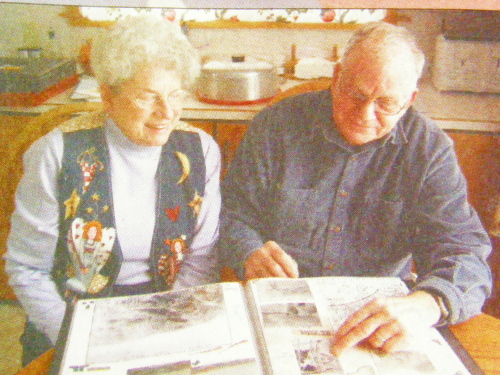
George & Ann Hewson Bray
Recalling memories of the "Forgotten War"..
Class of 1951
*****************
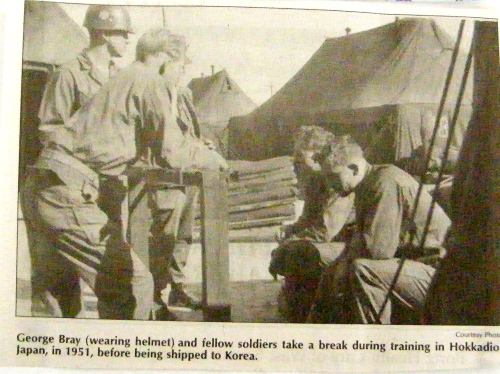
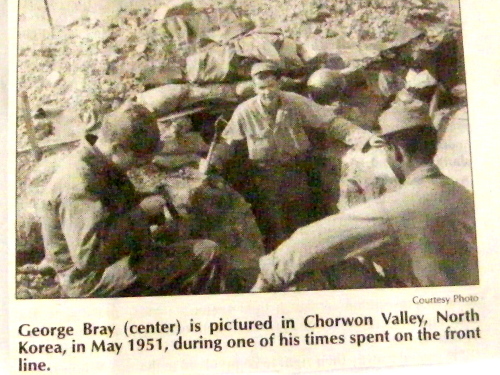
Picture Below
*****
George Bray (wearing helmet) and fellow soldiers
take a break during training in Hokkadio, Japan, in 1951, before being
shipped to Korea.
George Bray (center) is pictured in Chorwon Valley,
North Korea, in May 1951, during one of his times spent on the front line.
...from the Ogemaw County Herald..by
Elon Brissette/Staff Writer/reporter
******************************
...Serving in the "Forgotten War" is something George Bray will never forget.
Photographs and mementos of his days spent on Old Baldy and Pork Chop Hill are
now adhered to scrapbook pages for Bray to share his stories with his grandchildren and others who may come along asking about
his Army days. And his memories of the time he spent in Korea are as vivid as the memory book displays.
After enlisting in the U.S. Army January 7, 1951, at 18 years old, Bray trained
at Camp Polk, La. HIs division then moved to Hokkaido, Japan, to help fill in until December for the National Guard, who were
short-handed. Then, Bray volunteered three times to go to Korea, being turned down each time.
"They took my friends, and I was left behind, and I thought I wasn't going," Bray
said. "Then, they took the whole division over."
Bray said the first time on the front line was uneventful, but he will never forget
the bitter temperatures. "It was so beastly cold," he said. "We didn't have any heat and about froze to death."
"We go to these (Army) reunions and all the men say the never want to be cold again,"
Bray's wife Ann said.
In February 1952, Bray was put on the front line again and encountered Chinese
soldiers for the first time as he was on an ambush patrol.
"That's a lot like deer hunting." He said. "Like you're waiting for deer, but you
wait for their patrols."
When I was sitting on the ground, I heard water like a little stream and heard
a sound. Later on, the moon came out and it got real bright. I was about half froze and looked to my left and noticed five
guys coming up the rice paddy, and we all fired at the same time. We all took off running because we weren't sure if we were
going to run into any more."
They also weren't sure if they would run into any more enemies when checking bunkers.
The U.S. Army used the same bunkers on Pork Chop Hill during the day that the Chinese Soldiers used at night. Every morning,
the Army would have to make sure nobody was in the bunkers they wanted to use.
"We didn't know if anyone would be waiting for us, but luckily there never were,"
Bray said. "You just had that feeling (when)you made a corner you would encounter one or one was waiting for you."
At the end of May, Bray and his division traveled to an area in front of a barren
hill, later to be known as Old Baldy. Around June 5, Mustang fighter planes began bombing the area.
"That afternoon we heard machine guns and saw people running over the hill," Bray
said. "We jumped up and started shooting. It ended up being the A Company. We were shooting at our own men."
Bray and his fellow troops were not informed their own soldiers were in that area
and began firing at the people running down the hill. Because the soldiers were roughly 800 yards away, nobody was hit.
A few days later, Bray saw a green flare light the sky, which was an announcement
from the Chinese that they were starting their artillery. They shelled Bray's division for about 20 minutes and then stopped.
The army finished digging foxholes before the firing began again at night. It lasted for about an hour and a half, then
stopped again. The lieutenant warned Bray and the other soldiers that it was not done and they should expet the Chinese
infantry the next time they hit.
When the infantry came that night, Bray described the experience as a scene out
of the movie "Saving Private Ryan."
"That's how it was, people running around screaming." he said, "You didn't know
who to shoot at, so we didn't shoot. Spent most of the time trying not to get hit."
"It was dark so all you could see were tracers. They were just flying all over
(every) which way. You'd look around periodically, but you didn't dare shoot at them becaue you didn't know if they were your
guys or theirs. That was probably the worst of the lot up there on that hill."
Shortly after, Bray and his fellow troops traveled up Old Baldy to "hold the hill
again" for the night. The Army ws instructed to go to the top of the hill to show themselves to the Chinese, baiting them
to come out. After they did that, they got back into their foxholes and heard a grenade explode.
"They were calling for our medics to get a medic to get up there." Bay said. "Of
course, we knew better than that. I heard a mortar round coming, and just as I reached up and pulled my helmet down, shrapnel
went flying and something hit me here (left shoulder)and I thougt it killed me."
"It was just a part of a pack board that just stung when it hit me."
While on reserve again in August, Bray noticed the names of the whole company he
trained with posted on the bulletin board for soldiers who were going home. But his name wasn't listed.
"I thought, 'Here we go again',"he said.
After fighting a downpour for 12 days and 12 nights, and helping haul Japanese
artillery pieces for the lieutenant who wanted them for decoration, Bray said it was his time to go home.
"Next thing I knew, my name came up on the list and I got out of there," he said.
"Hallelujah".
Besides the shooting, explosions and fighting, there were some entertaining things
that happened in Korea. Bray said it wasn't all gruesome, including time when Korean workers were bringing breakfast
for the U.S. soldiers and lost some of the food on the trip.
"One Korean kid slipped and fell and scrambled eggs were flying all over the place
as he slid down the hill," Bray said. "It's funny now. It wasn't then."
During his trip back home, Bray said he had his last $52.10 stolen on the ship,
had coffee spilled in his lap from a welcome home committee, got stuck in a snowstorm and had to sleep in his car, and then
was pulled over by the Michigan State Police for having out-of-state plates. But, he made it back home to West Branch after
being honorably discharged January 9, 1954.
While Bray was in Korea, he had exchanged letters with Ann(Hewson), a girl he went
to high school with.
"I was in college while he was gone, but we wrote the best we could," Ann said.
"His writing conditions weren't as good as mine. I had a desk and a lamp and he had a hole and a candle..."
"If you could find one," Bray added.
The couple married in May 1954.
The have a daughter, Jan Collins; a daughter-in-law, Sandy and grandchildren, Mallory
and Eden Collins, and Kimberly and Michael Bray. They lost their son, George "Bill"William, in 1997.
The Brays had the chance to take a two-week-long tour in Korea at the end of 2001,
which was a trip that George looked forward to.
"In South Korea, when you get up to the DMV (Demilitarized Zone), it looks like
it did when we were there," he said. "It was interesting to see how the country (in other areas)had been built up"
Currently, Bray works for the Ogemaw County Clergy Association Food Bank ordering
food to stock in the basement of the Trinity Church. He and Ann reside in West Branch.
**********************************
*************************
************************
February 27, 2009...
Dan Benjamin, brother of Don Benjamin from the class of 1951..has
shared the following...
Don lived in Homa,Lousiana, died Nov 20,2008 in
Bradenton, Florida.. He is survived by his children, Kathy, Denna, David and Michael....and 6 grandchildren.
He died of heart problems along with other complications.
**************
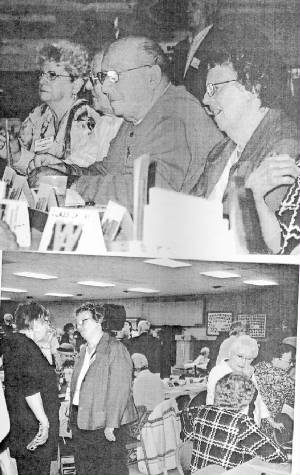
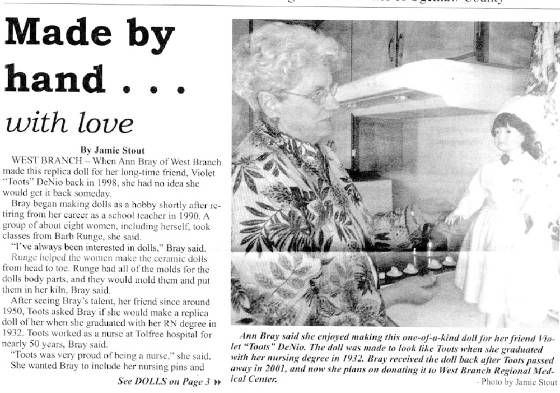
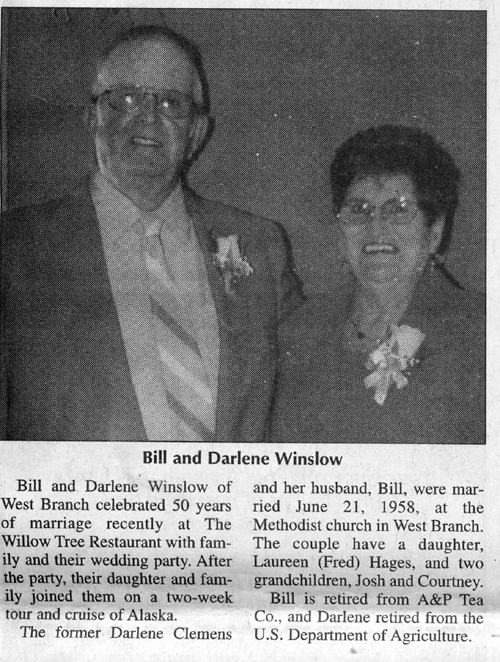
| 50TH ANNIVERSARY CELEBRATION |
|
|
| Bill Winslow (1951) Darlene Clemens Winslow (1954) |
King Burt and Queen Phyllis Ogemaw County Fair 2014
UNKNOWN ADDRESSES
Dick Chapman
David Gussman
Henry Huck
Betty Mattice
Mary J. Lucas Nestle
* * * * *
DECEASED CLASSMATES
Dick Bashaw
7-26-2011)
June Wolfe Maxey
(May 31,2013)
Betty Marshall Graham
Mary Lou Ellis Dunne
Don Benjamin
(November 8, 2008)
John Roger Bennett
Jackie Boman Smeiser
Willy Bragg
(2001)
Barbara Brandell Carroll
(2001)
Ruth Burkett VanLiere
George Carroll
(February 8,2006)
John W. Coulter
Shirley Fox
(2001)
Erik Kaas
(May 30,2004)
Bill McCracken
Dale N. Munn
(August 1, 2002)
William Palm
Joe Petrovich
Harley D. Sappington
(1995)
Marvin Zimmerman
Arthur Zink
(1998)
********
|